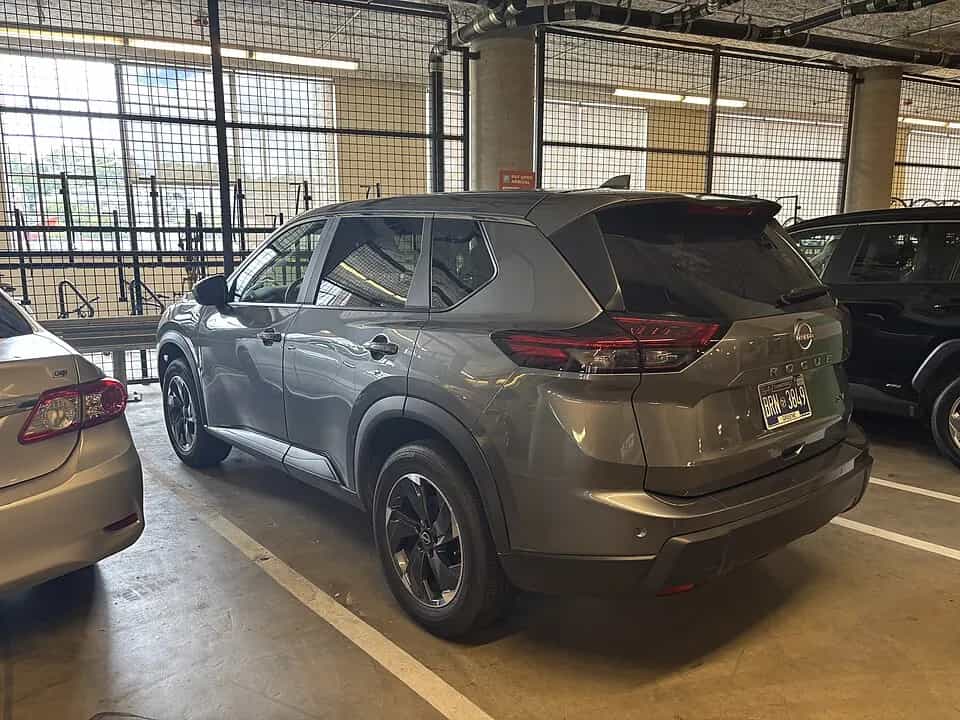
Nissan Rogue Plug-In Hybrid
Importing a used Nissan Rogue Plug-In Hybrid from the USA
The Nissan Rogue Plug-In Hybrid is a newer addition to Nissan's US crossover line-up, and it arrived through the Nissan–Mitsubishi alliance rather than as a ground-up Nissan design. That background shapes everything about the car, from its powertrain to its parts commonality, and it is worth understanding before you import a used Rogue Plug-In Hybrid from the USA. This page sets out what the model is, how it drives, what the American used market looks like and how the German and EU import process works in practice.

Model history and generations
The standard Nissan Rogue has been a mainstay compact SUV in the United States for years, with the current third generation launched for 2021. The plug-in hybrid variant is a much more recent branch, developed on the back of the alliance's plug-in hybrid engineering rather than the conventional Rogue's own hardware. Because it is a young offering, the used pool is small and there are no meaningful sub-generations yet; instead you are choosing between individual well-kept cars. Buyers cross-shopping should be aware that the PHEV shares a great deal with the Mitsubishi Outlander Plug-in Hybrid, which is the more established sibling in the same segment.
Engines and drivetrain
The plug-in hybrid layout centres on a naturally aspirated four-cylinder petrol engine paired with front and rear electric motors, giving electronically controlled all-wheel drive without a mechanical propshaft to the rear axle. A usable traction battery in the region of the low-20s kWh supports a meaningful electric-only commute before the petrol engine steps in. The system prioritises electric driving in town and blends to hybrid operation at speed, with selectable regenerative braking. This series/parallel PHEV approach is well proven in the alliance's Outlander PHEV, so the fundamentals are understood even though the Rogue-badged version is new. Exact output and electric range should always be confirmed against the specific car's documentation, as figures vary by model year.
Which trim makes sense
The Rogue Plug-In Hybrid is a five-seat compact crossover. US trims typically mirror the wider Rogue and alliance family, offering a range from well-equipped mid trims up to a leather-lined top specification with a larger central screen, heated seats, a surround-view camera and driver assistance. A panoramic roof and premium audio are common on higher American cars.
Supply on the US market
Availability is limited because this is a recent model, so expect a thin but growing supply of low-mileage, late-model examples, often lease returns. Most cars are all-wheel drive given the PHEV's electric rear axle. When shopping, the plug-in specifics matter: check that the charging cable is present, that the high-voltage battery has been charged regularly and that the car has seen dealer servicing. Condition is generally strong on such young vehicles, but a plug-in that has never been plugged in behaves differently from one that has, so charging history is a genuine value signal.
Who benefits from importing
This car suits a buyer who wants a practical compact SUV that can cover a daily commute on electricity yet still make a long motorway trip without range anxiety. It is a sensible middle path between a conventional hybrid and a full EV. Importing makes most sense when you find a specific low-mileage US car in the exact trim and colour you want, and when you value the alliance's proven plug-in hardware.
Technical data
| Body style | Compact SUV (5 seats) |
| Powertrain | Plug-in hybrid (petrol + twin e-motors) |
| Drive | Electronic all-wheel drive |
| Petrol engine | Naturally aspirated four-cylinder |
| Front motor | Electric traction motor |
| Rear motor | Electric traction motor (AWD) |
| Traction battery | approx. low-20s kWh (lithium-ion) |
| Charging | AC plus DC fast charge (version-dependent) |
| Electric range | meaningful EV-only commute (confirm per car) |
| Seating | 5 |
| Platform origin | Nissan–Mitsubishi alliance PHEV |
| Transmission | Single-speed / electronic CVT-type |
| Segment | Compact plug-in SUV |
| Market | Recent US introduction |
| Related model | Mitsubishi Outlander Plug-in Hybrid |
Known weak points and maintenance
The plug-in hardware in this alliance family has a solid track record, but a few points deserve attention. The 12V battery on complex hybrids can be a weak spot if the car sits unused, so confirm it holds charge. Check that all charging modes work and that the cable and portable charger are present, as replacements are costly. Watch for uneven brake-pad wear, since regenerative braking can leave rear pads underused and prone to corrosion on cars that sit. As with any recent, low-volume model, a full dealer service history is reassuring and helps confirm that software updates and any recall work have been carried out.
US and EU spec compared
US cars use amber rear turn indicators in most builds, a speedometer reading primarily in mph, and charging hardware sized for North America. Headlight beam pattern and rear fog lamp provision are the usual items a German inspection checks. Infotainment and navigation may be region-locked to North American maps; connected services can differ from the European offering. None of this prevents import, but each item should be planned for.
The import process in detail
Choose the specific car and record its VIN; run a VIN and origin check to establish the assembly plant, which drives the customs outcome; place funds in escrow so payment releases only against clean documents; ship by ocean freight (container or RoRo) to a port such as Bremerhaven; clear customs under the correct code; complete TÜV inspection and individual approval (Einzelabnahme); then register the car in Germany.
What customs clearance really costs
Key point: duty depends on the plant of build; only a VIN check secures the 0% rate. Import VAT of 19% applies regardless.
Read the two charges separately. EU import duty can be 0% only for vehicles of provable US origin under Regulations (EU) 2026/1455 and 2026/1461, imported by direct transport, valid from 1 July 2026 to 31 December 2029. This alliance PHEV is often assembled outside the United States, in which case it does not qualify and the standard duty rate applies. German import VAT (Einfuhrumsatzsteuer) at 19% always applies on top, calculated on the customs value plus duty and freight. We do not promise duty-free status; the origin is proven from the VIN and plant code before anything is claimed.
TÜV, modifications and registration
Expect lighting adaptation to ECE standards, confirmation of a rear fog lamp, and a km/h speedometer. Documentation of the high-voltage system supports the individual approval, and the charging equipment should be checked for EU socket compatibility before the car is used here.
Check before you buy
Confirm the full VIN and decode the plant of assembly. Pull a Carfax or AutoCheck history for accidents and title branding. Verify the traction battery has been charged and used regularly. Confirm the charging cable and portable charger are included. Check brake condition, especially rear pads. Confirm a clean (not salvage or rebuilt) title. Ask for a complete service and recall record.
Common questions
Can a used Nissan Rogue Plug-In Hybrid be imported duty-free?
Only if the specific VIN is of provable US origin under the 2026 EU rules and shipped by direct transport. Because this PHEV is often built outside the USA, 0% cannot be assumed and is never guaranteed in advance.
Does the 19% import VAT always apply?
Yes. German import VAT applies to every import regardless of origin and is separate from customs duty.
Is the Rogue PHEV related to the Mitsubishi Outlander?
Yes, it shares plug-in hybrid engineering from the Nissan–Mitsubishi alliance, which is why the Outlander Plug-in Hybrid is its closest relative.
How far can it drive on electricity alone?
It offers a meaningful electric-only commute before the petrol engine engages; confirm the exact figure against the specific car's documents.
Is it all-wheel drive?
Most examples are, using an electric rear motor rather than a mechanical driveshaft.
What should I check on a used plug-in hybrid?
Battery charging history, the presence of the charging cable, brake wear and a full service record.
How long does importing take?
Usually several weeks from purchase to registration, driven mainly by shipping and inspection scheduling.
See the wider range under Nissan in the Carhub, compare with the Mitsubishi Outlander Plug-in Hybrid, the Toyota RAV4 Plug-in Hybrid or the standard Nissan Rogue, or browse current Rogue Plug-In Hybrid listings.